
Two key advisers to Prime Minister Benjamin Netanyahu, Yonatan Urich and Eli Feldstein, were arrested on Monday as part of an ongoing investigation into potential connections between Israeli officials and Qatar.
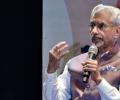
India's External Affairs Minister S Jaishankar has expressed concern over information regarding USAID funding in India, calling it "concerning" and hinting at potential "bad faith" activities. Jaishankar asserted that India is looking into the matter and that the country should know who is involved in such activities. He also emphasized the need to expand India's security definition in the digital age, highlighting the influence of technology and narratives on public perception. The statements come amid controversy surrounding USAID funding for certain activities in India, with the US President Donald Trump questioning the agency's funding of voter turnout efforts.
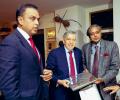
All-party parliamentary delegations on Friday met leaders and diplomats from several countries to galvanise international action against terrorists and decisively counter the tactics of those who perpetrate, support and sponsor cross-border terror activities against India.

The Union Budget 2024-25 on Tuesday allocated Rs 2,19,643 crore to the Ministry of Home Affairs with the majority of it -- Rs 1,43,275 crore -- being given to central police forces like Central Reserve Police Force (CRPF), Border Security Force (BSF), and Central Industrial Security Force (CISF) which are responsible for internal security, border guarding, and security of vital installations.
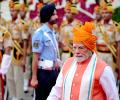
'The Election Commission's involvement in the avoidable SIR controversy has carried a message down to the last voter -- who just does not like it,' observes N Sathiya Moorthy.
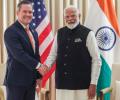
Prime Minister Narendra Modi said he had a 'fruitful meeting' with United States National Security Advisor Michael Waltz and they discussed defence, technology and security areas, which are important aspects of the India-US ties.
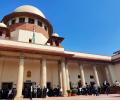
The top court said there are serious lapses in the enforcement of the 2013 Prevention of Sexual Harassment Act.
World leaders, including US President Donald Trump, Russian President Vladimir Putin and Israeli Prime Minister Benjamin Netanyahu, condemned the terror attack in Jammu and Kashmir that killed 26 people, expressing solidarity with India. The attack was claimed by The Resistance Front (TRF), a proxy of the Pakistan-based Lashkar-e-Taiba (LeT) terrorist group. The attack came during US Vice President J D Vance's maiden visit to India. Prime Minister Modi, who had arrived in Saudi Arabia on a two-day visit earlier in the day, cut short his visit and departed for New Delhi on Tuesday night following the attack.
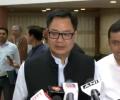
Defence Minister Rajnath Singh told an all-party meeting that at least 100 terrorists were killed in the Indian strikes on terror sites in Pakistan and Pakistan-occupied Kashmir under 'Operation Sindoor'. Leaders from various parties showed maturity and extended all support to the government and armed forces.

The group waving separatist flags was barricaded and monitored by a significant police presence outside the venue on Wednesday night, with officers rushing to restrain the man as he ran past the barricade in an attempt to block the path of the minister's car pulling at an Indian flag.
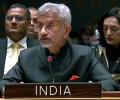
India abstained on two UN General Assembly resolutions calling for a de-escalation, an early cessation of hostilities and a peaceful resolution of the war against Ukraine. The resolutions were adopted on the third anniversary of the Russia-Ukraine conflict, with the UN Secretary General stressing that the war in Ukraine stands as a grave threat to the peace and security of Europe and the core principles of the United Nations.
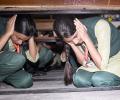
India conducted nationwide civil defence mock drills simulating multiple hostile scenarios like air raids, fire emergencies, and rescue operations across several states and union territories. The drills, dubbed 'Operation Abhyaas,' aimed to enhance emergency preparedness in light of recent terror attacks. The exercises involved coordinated efforts by various agencies, including civil defence personnel, police, fire and emergency services, and the military. Mock drills were conducted at various locations, including railway stations, malls, and high-rise buildings, showcasing the response capabilities of authorities in different emergency scenarios. The drills highlighted the importance of public awareness and cooperation in dealing with real-time emergencies.
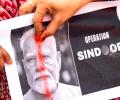
World leaders, including the UN Secretary-General and US President Donald Trump, have urged India and Pakistan to exercise restraint and seek peaceful solutions to the ongoing tensions. The calls for calm come after India conducted airstrikes in Pakistan-occupied Kashmir in response to a recent terrorist attack. Leaders from the US, Russia, UK, China, UAE, Qatar, and Japan have expressed concern over the escalating situation and emphasized the need for dialogue and de-escalation.

John Spencer, the chair of Urban Warfare Studies at US-based think-tank Modern War Institute, said India showcased its ability to strike any target in Pakistan "at will" and drew and enforced a "new red line" for cross-border terrorism under the operation that was launched early on May 7.
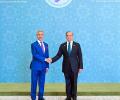
It was said that Sharif wanted the PML-N-led coalition government to utilise all available diplomatic resources to restore peace between the two nuclear-armed states, saying he was not keen on taking an aggressive position, The Express Tribune reported.
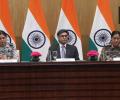
Colonel Sofiya Qureshi revealed that 300 to 400 drones were deployed across 36 locations, with several being shot down by Indian forces using both kinetic and non-kinetic methods.

'Fears in Washington began to intensify when it was realised that subsequent Pakistani and Indian attacks on major military facilities -- which were significant in terms of geographic scope and intensity -- could rapidly take both sides to where neither actually wanted to go.' 'The US objective was to stop the fighting as soon as possible. Everything else was secondary.'
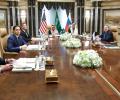
After more than four hours of talks in Saudi Arabia, the US and Russia agreed on four key principles, Rubio said on Tuesday. These include appointing a high-level team to help "negotiate and work through the end of the conflict in Ukraine" in a way that's "acceptable to all the parties engaged."

A former Bangladeshi beauty queen, Meghna Alam, has been detained for allegedly setting up a honey trap for a former Saudi ambassador in Dhaka, in an attempt to extort USD 5 million. Alam, who runs a charity, was initially detained without charge under the controversial Special Powers Act. Her arrest sparked a media outcry and concerns by rights watchdogs. Alam denies the allegations, claiming the diplomat wanted to marry her. The Saudi embassy has not commented, but media reports suggest the envoy left Bangladesh as the scandal unfolded.

'We are now in a situation where our country is not yet free.' 'China is still very strong and militarily powerful.' 'In such a situation, we need the Dalai Lama to bring about a resolution to the cause of Tibet.' 'That's one of the main reasons that at age 90, he has accepted that there should be a 15th Dalai Lama after him.'
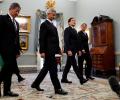
In a move sending a strong signal to China, foreign ministers from Quad countries -- India, Australia, Japan and the United States -- in a joint statement on Tuesday strongly opposed any unilateral actions that seek to change the status quo by force or coercion.

The Congress party has claimed credit for the extradition of Tahawwur Rana, an accused in the 2008 Mumbai terror attacks, from the US, saying the Modi government did not initiate the process and merely benefited from the "mature, consistent and strategic diplomacy" begun under the UPA. Former Home Minister P Chidambaram said the government did not secure any breakthrough to make the extradition possible, nor is it the result of any grandstanding. He added that it was a testament to what the Indian state can achieve when diplomacy, law enforcement and international cooperation are pursued sincerely and without any kind of chest-thumping. Chidambaram detailed the UPA government's efforts in securing Rana's extradition, citing the registration of a case against him in 2009, diplomatic pressure on Canada and the US, and continued efforts despite legal setbacks. He highlighted the role of the UPA in securing Rana's conviction for other terrorism-related offences and the cooperation between the US and Indian agencies in gathering evidence and securing his extradition. The Congress leader further stated that it was the UPA's groundwork that paved the way for Rana's extradition, even after the change in government in 2014.
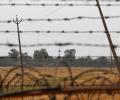
The UN Security Council could meet soon to discuss the situation between India and Pakistan, with the UNSC President expressing concern over rising tensions between the nuclear-armed neighbors. The President, Ambassador Evangelos Sekeris of Greece, said a meeting would provide an opportunity to express views and help diffuse tensions. Sekeris also condemned terrorism in all its forms, including the recent attack in Pahalgam, and called for de-escalation and dialogue between India and Pakistan.
The latest annual report of the finance ministry has disclosed that the agency funded seven projects worth USD 750 million in 2023-24.
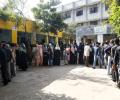
The Finance Ministry's annual report has revealed that the US Agency for International Development (USAID) funded seven projects worth USD 750 million in India during the 2023-24 fiscal year. The projects, implemented in partnership with the Indian government, cover areas like agriculture and food security, water and sanitation, renewable energy, disaster management, health, sustainable forests, and climate adaptation. This disclosure comes amidst controversy over USAID's alleged role in influencing Indian elections, with claims that the agency allocated USD 21 million to India for 'voter turnout'. However, the report clarifies that no funds were dedicated to enhancing voter turnout.
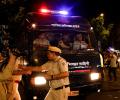
Tahawwur Rana, a Canadian citizen and native of Pakistan, was extradited to India to face charges related to his alleged role in the 2008 Mumbai terror attacks. The US Department of Justice said Rana allegedly commended the LeT terrorists who carried out the attacks and suggested they should be awarded Pakistan's highest gallantry award. Rana is accused of facilitating a fraudulent cover for his childhood friend, David Headley, to conduct surveillance in Mumbai for the Lashkar-e-Taiba (LeT) terrorist group. He is also accused of helping Headley submit false visa applications to Indian authorities. This extradition follows a lengthy legal process that began in 2020 with India's request for Rana's surrender. Rana, who was previously convicted in the US for providing material support to LeT, will now face trial in India on 10 criminal charges related to the Mumbai attacks.
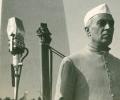
On Jawaharlal Nehru's 61st death anniversary, Utkarsh Mishra recalls how India's first prime minister cultivated a unique role for the newly independent country on the world stage.
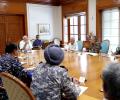
'One good outcome of Operation Sindoor -- perhaps, its best outcome -- could be that India has resumed meaningful contact directly with Pakistan at the military-to-military level,' observes Ambassador M K Bhadrakumar.
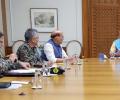
India has called Pakistan's nuclear bluff with Operation Sindoor and sent a psychological message to state-sponsored terrorists: nobody is untouchable and no place in Pakistan is safe for you, government sources said on Sunday.
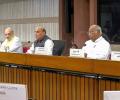
When the country has been at war, the Opposition has buried its differences with the government, points out Aditi Phadnis.

'If you follow the law, America offers opportunities. But those who violate the law will face the consequences.'
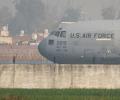
The deportation of 104 Indian nationals from the US, followed by another 119 set to arrive in Amritsar on Saturday night, has sparked controversy in India over the treatment of returnees. The US government's intensified crackdown on undocumented immigrants has led to criticism of the use of handcuffs and shackles for deportees, even those who have committed no crimes beyond immigration violations. The issue has led to heated debates in the Indian Parliament, with opposition leaders demanding an inquiry into the deportation process. The Indian government is engaging with US officials to ensure the humane treatment of deportees, while also facing the challenge of reintegrating returnees into Indian society. The deportations highlight the ongoing tension between border control and human rights, and the complexities of US-India relations.

'If they aim to remain aligned with the public sentiment, as any democratic government should, then they must respond. Why else would the prime minister have cut short his visit to Saudi Arabia? And why would he have instructed the home minister himself to travel to Srinagar to assess the situation firsthand? This suggests that something is indeed being planned. I am quite certain of that, although the exact form it will take remains to be seen.'
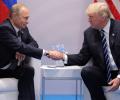
The US ended up abstaining from the vote for its own resolution at the General Assembly after several amendments were passed ahead of the vote to strengthen the language against Russia and reaffirm Ukraine's territorial integrity.

'It brings precarious peace because the red lines have shifted. 'The next Pahalgam attack would mean a full scale war.'
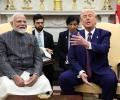
'Trump's aggressive stance towards China and preference for military posturing could shift the Quad's balance towards overt militarisation.'

India on Thursday night swiftly foiled Pakistan's attempts to hit various key Indian installations including military stations at Jammu, Pathankot and Udhampur with drones and missiles, the defence ministry said.

EAM Jaishankar's mission is aimed at strengthening India's strategic autonomy in a complex international environment, observes Ambassador M K Bhadrakumar.

The possible instances of front running at Quant Mutual Fund have likely pushed the Securities and Exchange Board of India (Sebi) to expedite the implementation of an institutional mechanism framework designed to curb such market abuses. This framework, approved by the Sebi board in April, was slated to take effect six months after its notification. But, recent developments have set the wheels of regulation turning faster.
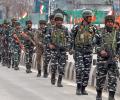
When the internal security situation spirals out of the control of the provincial law and order machinery, the CAPFs can be called in, providing a security buffer before the Army is deployed.
 © 2026 Rediff.com - Advertise with us - Disclaimer - Privacy Policy - Sitemap - Feedback - About us - Terms of use - Grievances